How Early Should You Start Preparing Your Business for Sale?
Published: November 16, 2026
Updated: November 16, 2026

Key Insights
- Start preparing 12–24 months before a planned sale.
- Start 18–36 months early if the business needs significant improvements.
- Strengthen financial performance and maintain reliable financial records.
- Reduce owner dependency to make the business easier to transfer.
- Improve business operations and document key processes.
- Address legal, tax, contract, IP and management issues before due diligence.
- Build a track record of sustainable improvement rather than making last-minute changes.
- Assess buyer readiness from the buyer’s perspective before going to market.
- Bring in professional advisors early enough to identify and address potential deal issues.
- The goal is to build a business that a buyer can understand, value, verify and confidently take forward.
Table of Contents
1.Why Should You Start Preparing for a Business Sale Early?2.What Should You Assess Before Preparing for a Sale?3.What to Focus on 1836 Months Before the Sale?3.1.Strengthen Financial Performance3.2.Reduce Owner Dependency3.3.Improve Business Operations4.What to Focus on 1218 Months Before the Sale?5.What to Do in the Final 12 Months Before Selling?6.How Can You Tell If Your Business Is Ready for Sale?7.When Should You Bring in Professional Advisors?8.How Match.asia Can Help You Prepare for a Sale?9.Conclusion10.Frequently Asked QuestionsPreparing a business for sale is not something that should begin when you decide to put it on the market. The strongest preparation usually happens while the business is still operating normally, giving you time to improve financial performance, reduce owner dependency, strengthen operations and resolve issues before a buyer starts asking questions. For most business owners, 12–24 months before a planned sale is a useful preparation window, while owners who have more flexibility may benefit from starting 18–36 months in advance. The right timeline depends on the condition, size and complexity of the business, as well as how much needs to change before it is ready for buyers. Starting early does not mean spending years trying to make the business perfect. It means identifying the factors that could affect buyer confidence and giving yourself enough time to address them properly.
Why Should You Start Preparing for a Business Sale Early?
A buyer is not simply purchasing your current revenue or last year's profit. They are evaluating whether the business can continue performing after ownership changes. That means they will look at the quality of earnings, customer relationships, management capability, operating processes, contracts, assets, liabilities and potential risks. Some improvements take time to become meaningful. If a business depends heavily on its owner, for example, hiring someone a few weeks before a sale does not demonstrate that the business can operate independently. Similarly, improving financial reporting immediately before going to market does not create the same confidence as a consistent financial history. Starting early also gives you more choices. You may have time to diversify customers, strengthen the management team, document important processes, resolve contractual issues or improve profitability without disrupting the business. If you wait until a buyer is already reviewing the company, the same problems can become negotiation points or reasons for the buyer to reduce their offer. The objective of business sale preparation is therefore not simply to make the company look attractive. It is to make the business more transferable, more understandable and easier for a buyer to verify.
What Should You Assess Before Preparing for a Sale?
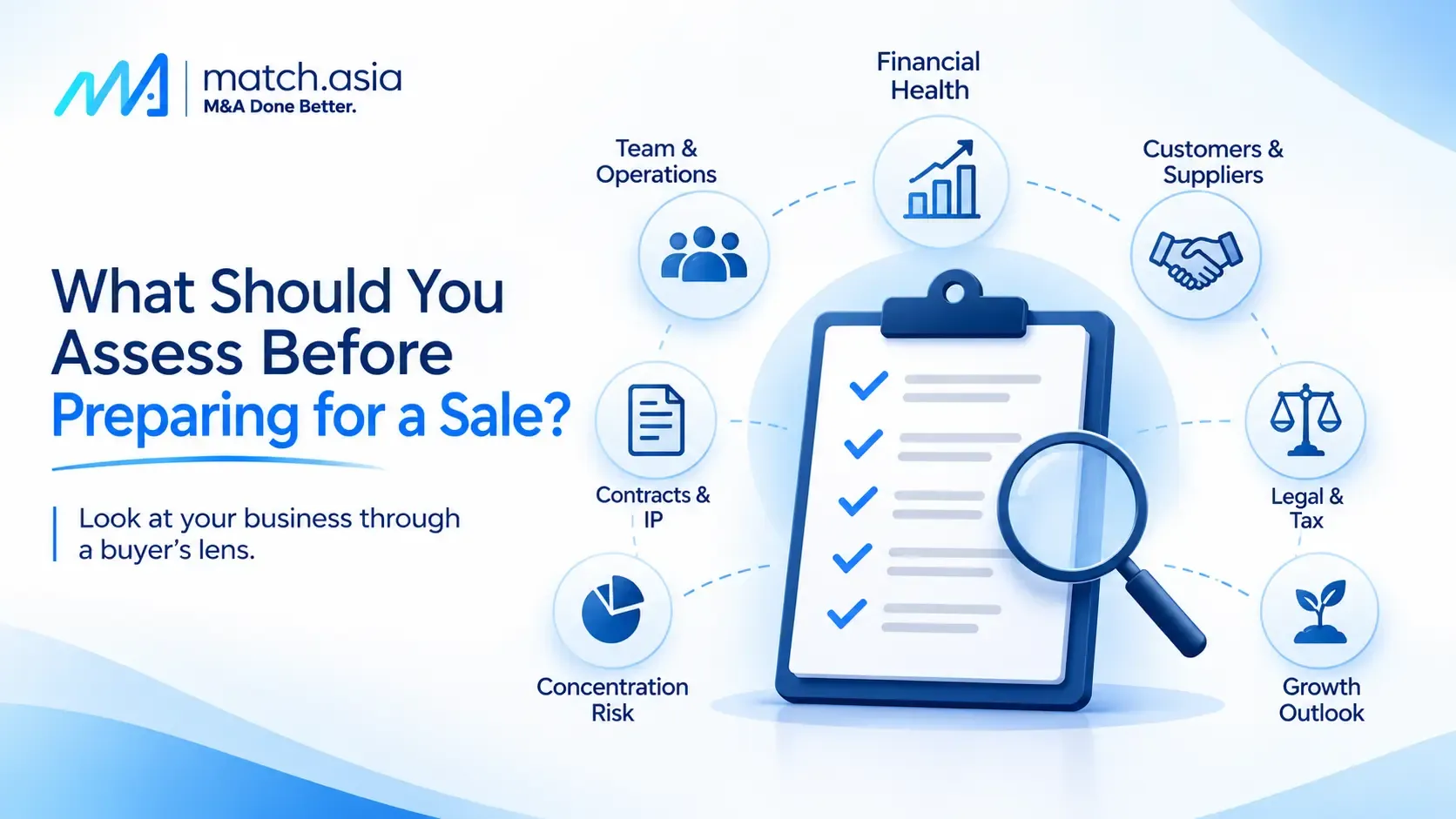
Before deciding what to improve, assess the business from a buyer's perspective. Start with the areas that are most likely to influence valuation, due diligence and the buyer's confidence in future performance. Consider the following questions:
-
- Are your financial records accurate, consistent and easy to understand?
-
- Can the business operate effectively without you?
-
- Are key customer and supplier relationships owned by the business rather than one individual?
-
- Does the management team have enough capability to run the company after the sale?
-
- Are important contracts documented and transferable?
-
- Is ownership of intellectual property clear?
-
- Are legal, tax and employment matters up to date?
-
- Are your operating processes documented?
-
- Is customer concentration creating a material risk?
-
- Can you explain the company's recent performance and future growth opportunities?
This assessment should identify the difference between what is working today and what a buyer may question tomorrow. You do not need to fix everything at once. The purpose is to establish priorities and create a realistic sale preparation plan.
What to Focus on 18–36 Months Before the Sale?
If you have two to three years before you expect to sell, you have the greatest opportunity to make meaningful improvements. This is the stage for changes that require time to establish a track record rather than cosmetic changes made shortly before marketing.
1. Strengthen Financial Performance
Clean, reliable financial information is one of the foundations of a successful business sale. Buyers need to understand how the company makes money, whether earnings are sustainable and whether reported performance accurately reflects the underlying business. Review your financial statements, management accounts, revenue recognition, expenses, margins, working capital and debt. Separate genuine business expenses from personal or discretionary expenditure and make sure any adjustments to earnings can be clearly explained and supported. Do not focus only on increasing short-term profit. A buyer will also want to understand whether that profit is maintainable. Cutting essential investment, delaying expenses or taking actions that temporarily improve EBITDA can create problems later if the underlying business becomes weaker. Where possible, build a consistent history of reliable financial reporting. Starting early gives you time to identify trends, address weak areas and demonstrate that improvements are sustainable rather than temporary.
2. Reduce Owner Dependency
A business that relies heavily on its owner can be harder to transfer. Buyers want to know what will remain when the seller is no longer involved in the day-to-day running of the company. Identify the areas where you are still the key decision-maker. This could include major customer relationships, sales, supplier negotiations, hiring, pricing, operations or technical knowledge. Then gradually transfer responsibility to capable members of the team. Introduce key customers to other senior employees, document important processes and give managers genuine responsibility for their areas. The objective is not simply to create an organisation chart. It is to build a business that actually functions without requiring the owner to make every important decision. Reducing owner dependency can take time because relationships, knowledge and decision-making authority are usually built over years. That is why it is one of the most valuable areas to address early.
3. Improve Business Operations
A buyer is more likely to have confidence in a business that can demonstrate repeatable and organised operations. Review how the company handles sales, customer service, finance, procurement, delivery, reporting and other critical activities. Identify processes that exist only in the owner's head or depend on one employee. Document them where appropriate and make sure important information is stored in systems that the business can continue using after a change in ownership. This is also a good time to review technology, equipment, licences, supplier arrangements and operational bottlenecks. The goal is not to transform the entire business before selling it. It is to remove avoidable operational risks and make the company easier for a new owner to understand and operate.
What to Focus on 12–18 Months Before the Sale?
Once you are within 12–18 months of your intended sale, move from broad improvements to more focused buyer readiness. Review major customer and supplier contracts, including renewal dates, termination rights, assignment provisions and change-of-control clauses. Strengthen relationships with key customers and reduce concentration risk where commercially practical. A buyer will want to understand not only how much revenue the business generates, but how secure that revenue is. This is also the right stage to review your management structure and identify key employees whose departure could materially affect the business.
Make responsibilities clear and address obvious gaps in management capability. At the same time, begin reviewing legal, tax, employment and intellectual property matters. Confirm that the company owns the assets and IP it relies on, that important agreements are properly documented and that outstanding issues are identified rather than discovered for the first time during due diligence. You can also begin thinking seriously about valuation and the types of buyers that may be interested in the business. Understanding what strategic or financial buyers may value about the company can help you focus your preparation on the factors that are most relevant to the market.
What to Do in the Final 12 Months Before Selling?
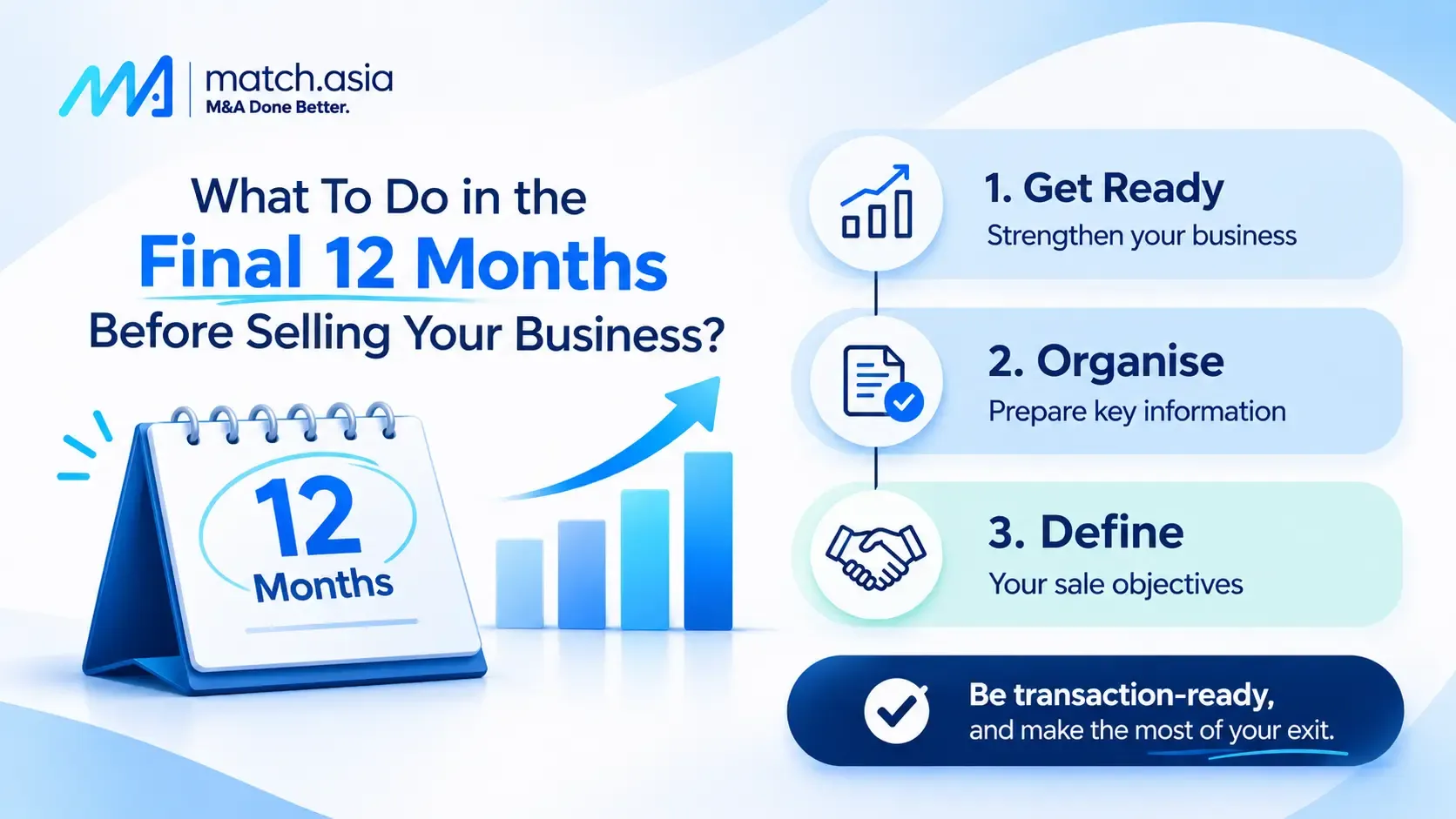
The final year should be focused on transaction readiness rather than major experimentation. By this stage, the objective is to make the business easy to understand, evaluate and present to credible buyers. Bring financial reporting fully up to date and review the latest trading performance. Make sure EBITDA adjustments and other normalisation items are properly documented. Prepare clear information on customers, suppliers, employees, assets, liabilities and growth opportunities. Begin organising the information that buyers are likely to request during due diligence. This may include corporate records, financial statements, management accounts, material contracts, employment documents, IP records, property documents, licences, tax information and other relevant records.
You should also define your sale objectives. Consider your preferred buyer type, valuation expectations, desired transaction structure, transition role and any priorities relating to employees or the future of the business. As the sale approaches, avoid making unnecessary changes simply to improve the appearance of the business. Buyers will look at the underlying numbers and operations. A business that has been genuinely strengthened over several years is more credible than one that appears to have been reshaped immediately before a sale.
How Can You Tell If Your Business Is Ready for Sale?
A business is not necessarily ready simply because it is profitable. Buyer readiness depends on whether the business can withstand scrutiny and continue operating effectively after the owner exits. You should be able to answer Yes to most of these questions:
-
- Can you clearly explain the company's recent financial performance?
-
- Are your financial records reliable and consistent?
-
- Can you support your EBITDA and other earnings adjustments?
-
- Can the business operate without your daily involvement?
-
- Are key customer relationships managed by the wider team?
-
- Are important contracts documented and accessible?
-
- Is ownership of intellectual property clear?
-
- Are key employees and management responsibilities clearly defined?
-
- Are material legal and tax issues understood?
-
- Can you provide buyers with organised information during due diligence?
-
- Do you have realistic expectations about business valuation?
-
- Do you understand which buyers are most likely to value the business?
If several answers are no, that does not necessarily mean you cannot sell. It shows where preparation should be prioritised.
When Should You Bring in Professional Advisors?
You do not need to wait until a buyer appears before speaking to professional advisers. Bringing in the right support early can help identify issues while there is still time to address them. An accountant can help review financial reporting, earnings quality and tax considerations. An M&A adviser or investment banker can provide insight into buyer expectations, valuation and the likely transaction process. A corporate lawyer can review contracts, corporate records, ownership issues and other legal matters.
The timing depends on the size and complexity of the business. For a straightforward SME sale, some advisers may only become heavily involved closer to the transaction. For a larger or more complex deal, earlier involvement can be valuable because the preparation itself may require financial, legal and commercial work. The important point is to avoid bringing advisers in only when a buyer has already identified a problem. Early advice gives you more time to decide whether an issue should be fixed, explained or managed as part of the eventual transaction.
How Match.asia Can Help You Prepare for a Sale?

Preparing a business for sale is easier when you understand how buyers are likely to assess it. match.asia approaches M&A as an end-to-end process, combining experienced M&A professionals with technology to help SMEs prepare, identify suitable buyers and navigate the transaction process. For sellers, preparation can begin with understanding where the business stands today. match.asia's Exit HealthCheck looks across key areas including financial readiness, legal and governance readiness, operations and documentation, IP and assets, people and HR, and seller motivation and deal readiness. This can help identify areas that may need attention before entering the market.
The preparation process should ultimately answer a practical question: If the right buyer appeared tomorrow, would the business be ready for serious due diligence? If the answer is no, identifying the gaps early gives you time to work on them before they become deal issues. match.asia can also support sellers beyond preparation by helping identify potential buyer fit and manage the broader M&A journey. The goal is not simply to find someone interested in the business, but to help sellers approach the market with a clearer understanding of their business, their objectives and the buyers most likely to value the opportunity.
Conclusion
The best time to start preparing a business for sale is before you need to sell it. A practical preparation window is often 12–24 months, while businesses with more complex issues or owners who can plan further ahead may benefit from starting 18–36 months before the intended sale. The most important work is rarely cosmetic. It involves strengthening financial reporting, reducing owner dependency, improving operations, protecting customer relationships, organising documentation and resolving issues that could create uncertainty during due diligence.
Starting early also gives you something that cannot easily be recreated at the last minute: a track record of improvement. Buyers can distinguish between a business that has genuinely become stronger and one that has simply been prepared for presentation. A sale does not have to be years away for preparation to be worthwhile. Even if you are already within 12 months of your target exit, prioritising the issues that matter most can improve buyer confidence and make the transaction process more manageable. The goal is not to create a perfect business before selling. It is to build a business that a buyer can understand, value, verify and confidently take forward.