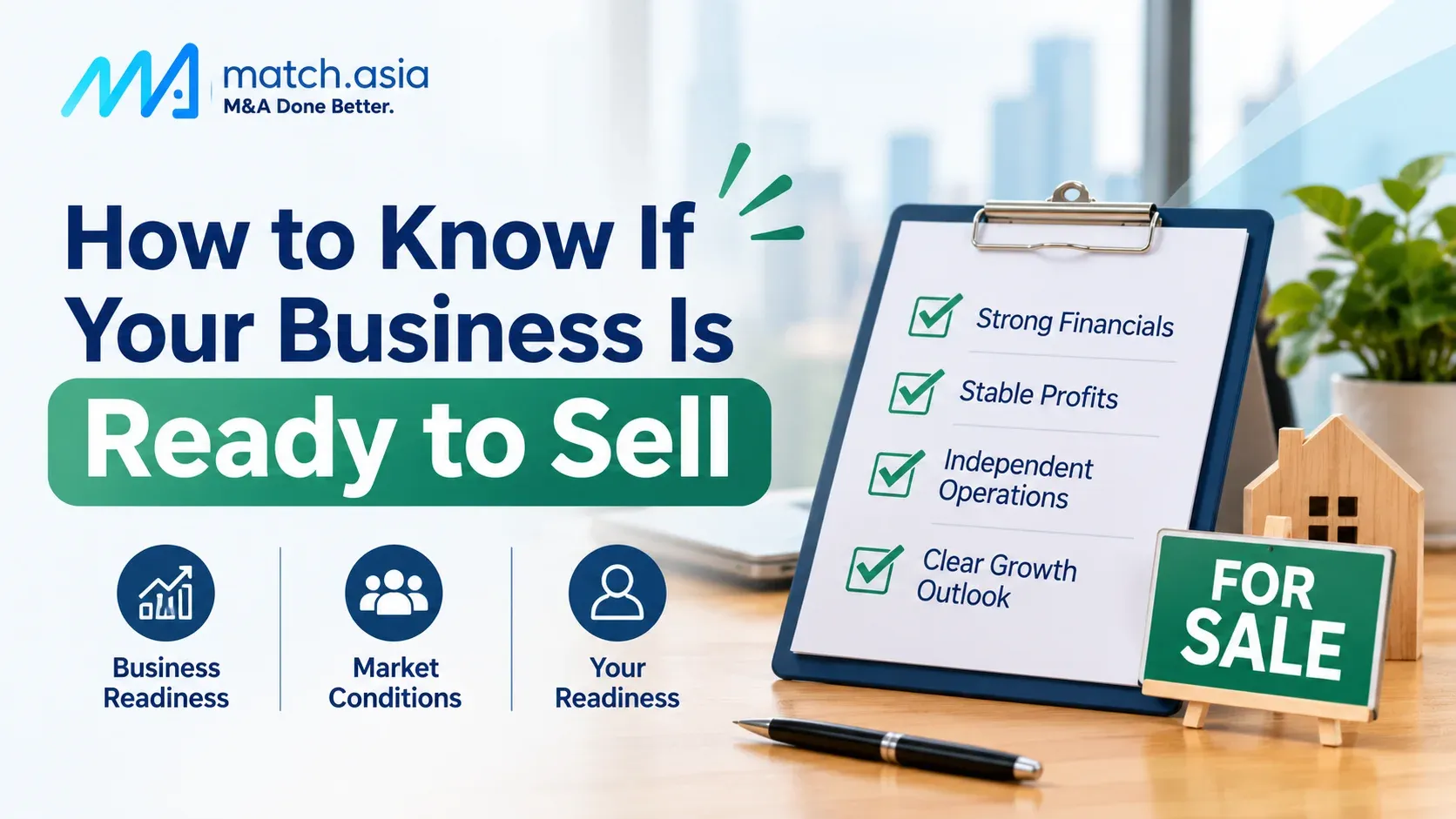
How to Know If Your Business Is Ready to Sell?
Published: November 20, 2026
Updated: November 20, 2026
Key Insights
- A business is ready to sell when its financial, operational and legal foundations are strong.
- Owner readiness matters as much as business readiness when planning an exit.
- Clean financials, stable profits and documented processes can strengthen buyer confidence.
- Low owner dependence makes a business easier for a buyer to take over.
- Customer concentration, legal issues and weak management can create buyer concerns.
- Market conditions and buyer activity can influence the right time to sell.
- A pre-sale valuation helps set realistic expectations about what the business may be worth.
- A business that is not ready to sell can often be strengthened over the next one to three years.
- The goal is to build a business that a buyer can understand, verify, operate and continue to grow.
Table of Contents
1.Signs Your Business Is Ready to Sell2.Your Personal Readiness to Step Away3.Choosing the Right Time to Sell a Business4.Checking What the Business Is Worth Before You Decide5.What to Do if Your Business Is Not Ready to Sell?6.Conclusion7.Frequently Asked QuestionsKnowing whether your business is ready to sell involves more than deciding that you want to exit. A buyer will look at the business itself, the market around it and the owner’s ability to step away. A business may be profitable but difficult to transfer, or it may be operationally strong but being offered at the wrong point in the market. Your personal readiness also matters because a sale can require you to remain involved for a transition period and accept that the business may operate differently after closing. The question is therefore not simply, “Is my business ready to sell?” It is whether the business is financially and operationally prepared, whether market conditions support a sale, and whether you are personally ready for the transition.
Signs Your Business Is Ready to Sell
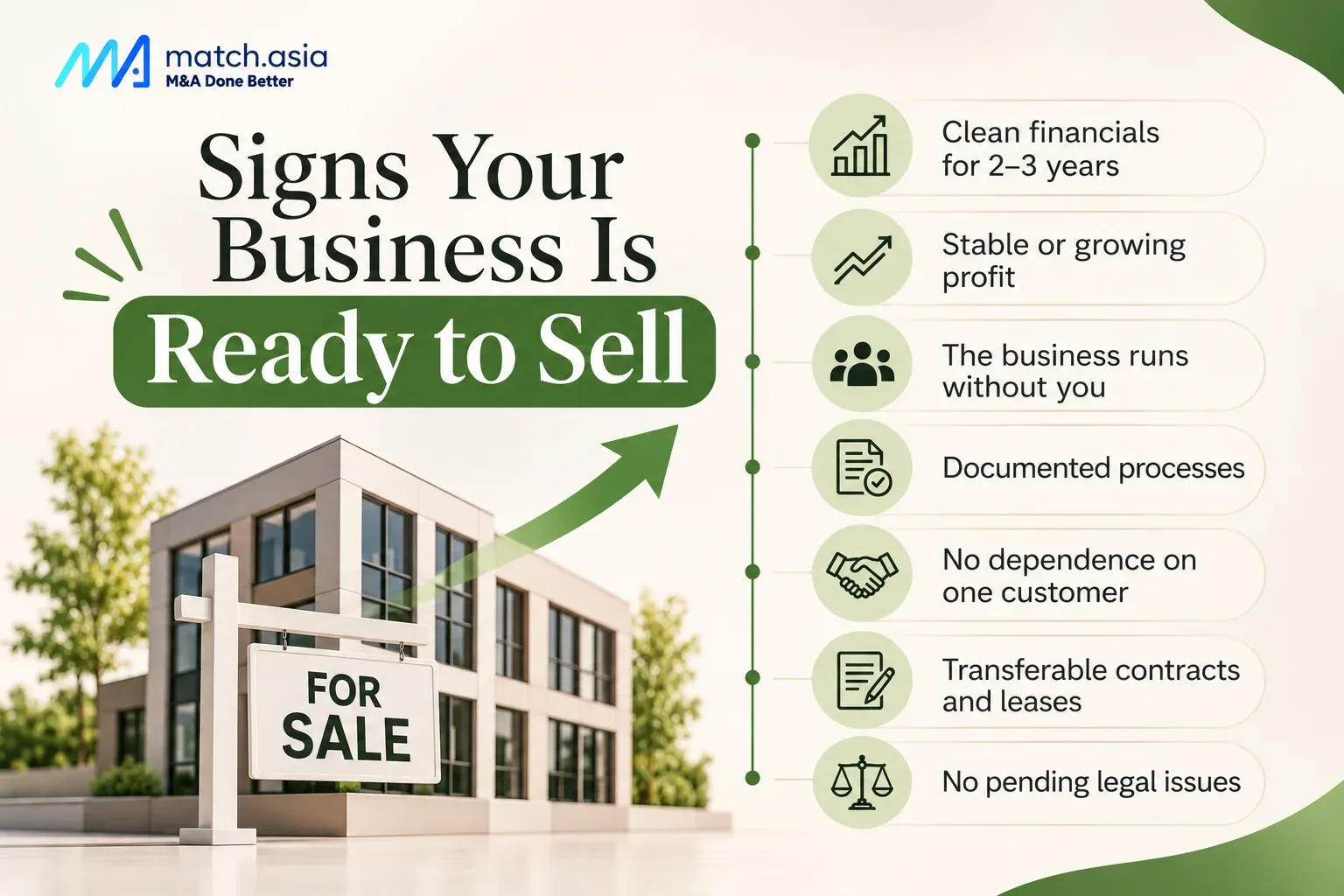
Several signs can indicate that your business is in a strong position to enter the market. Buyers generally want evidence that the company is financially reliable, operationally transferable and capable of continuing without excessive dependence on the current owner. Clean financials, documented operations and clear legal ownership can also make the due diligence process more efficient and reduce avoidable concerns. Use the table below as a practical first check.
| Sign | How to Check It Yourself | Red Flag for a Buyer |
|---|---|---|
| Clean financials for 2–3 years | Review your profit and loss statements, balance sheets, tax returns and supporting records. Check that figures are consistent and easy to explain. | Missing records, unexplained differences or financial information that cannot be verified. |
| Stable or growing profit | Look at profit margins and earnings over several years rather than focusing on one unusually strong period. | Declining profitability, volatile earnings or profits that depend on unusual one-off items. |
| The business runs without you | Take a step back from daily operations and identify what still requires your direct approval or involvement. | The owner controls key decisions, relationships or operations that cannot easily be transferred. |
| Documented processes | Check whether employees can follow key operating procedures without relying on your memory or instructions. | Important knowledge exists only in the owner's head or informal routines. |
| No dependence on one customer | Review revenue by customer and identify how much of total revenue comes from your largest accounts. | A major share of revenue depends on one customer or a small number of customers. |
| Transferable contracts and leases | Review customer, supplier, employment, property and other important agreements for change-of-control or assignment provisions. | Contracts cannot be transferred or require consent that has not been addressed. |
| No pending legal issues | Review outstanding disputes, tax matters, regulatory issues, licences and other potential liabilities. | Active litigation, unresolved compliance issues or unclear obligations that could affect the transaction. |
These checks do not replace professional due diligence, but they can help identify whether your business is genuinely ready to be presented to buyers. Strong businesses are generally easier for buyers to understand, assess and transfer, while unresolved weaknesses can affect both valuation and deal certainty.
Your Personal Readiness to Step Away
A business can be ready for sale even when its owner is not. This is one of the most important distinctions to make before going to market. Owners sell for many reasons. Retirement is common, particularly when there is no suitable successor. Some owners sell because they are experiencing burnout or want greater control over their time. Health considerations can also influence the decision, while others want to move on to a new business, investment or career opportunity. There is no single right reason to sell, but the decision should be clear enough that you can make consistent choices throughout the transaction. Before deciding that you are ready, ask yourself:
-
- What do I want to do after the sale? Have you thought about retirement, another venture, investment, family priorities or a different role?
-
- Am I willing to stay during a transition period? A buyer may want the owner to remain involved for a defined period to transfer relationships, knowledge and responsibilities.
-
- Am I comfortable with someone else running the business differently? The buyer may change the company's strategy, team structure, branding, operations or growth priorities.
-
- What matters most to me besides price? Consider employee continuity, customer relationships, legacy, the future of the business and the terms of the transaction.
-
- Am I emotionally prepared to let go? Selling a business you have built can be difficult even when the financial decision makes sense.
Owner uncertainty can become a serious problem late in the process. A seller who changes expectations, becomes uncomfortable with the buyer's plans or struggles to accept the transition can create delays or cause negotiations to break down. The earlier you understand your own priorities, the easier it is to define what a successful exit looks like.
Choosing the Right Time to Sell a Business
There is rarely one perfect moment to sell, but some conditions can create a stronger selling window. In general, owners are in a better position when the business has a credible growth story, buyers are active and the wider market supports transactions. A potentially attractive time to sell may be when:
-
- The business is growing. Increasing revenue, healthy margins and improving earnings can make the future opportunity easier for buyers to understand.
-
- Industry demand is strong. Buyers may be more interested when the sector is expanding or experiencing consolidation.
-
- Qualified buyers are active. Strong buyer appetite can increase competition for attractive businesses.
-
- Financing conditions are favourable. The cost and availability of acquisition financing can influence what buyers are able and willing to pay.
-
- An attractive offer has already emerged. An unsolicited approach from a credible buyer may create an opportunity worth evaluating rather than automatically dismissing.
Timing can also work against a seller. Falling revenue, shrinking industry demand, a strong new competitor or pending litigation can make a business harder to sell or reduce buyer confidence. Broader economic conditions and the cost of selling also matter when deciding whether to proceed. The important point is that market timing should be considered alongside business readiness. Waiting for the “perfect” market may not make sense if the business is already showing signs of decline, while selling during a strong market may be premature if major weaknesses remain unresolved.
Checking What the Business Is Worth Before You Decide
Before deciding whether to sell, it is useful to understand what your business may realistically be worth. Many owners have an expected price in mind based on years of investment, revenue, assets or personal expectations. Buyers, however, assess value based on future earnings, risk, comparable transactions, business quality and the return they expect from the acquisition. A pre-sale valuation helps identify the gap between what you expect to receive and what the market may realistically support. For smaller businesses, valuation may involve a profit multiple applied to an appropriate earnings measure. Owners may also need to consider legitimate add-backs—expenses included in the accounts that a buyer may not expect to continue after the transaction. Comparable sales can provide another reference point by showing how similar businesses have been valued or sold.
However, rules such as “a business is worth 3x profit” should only be treated as rough benchmarks. Multiples vary by industry, size, growth rate, profitability, recurring revenue, customer concentration, management strength, owner dependence and perceived risk. Two businesses with identical revenue can therefore have very different values. A practical first step is to use a business valuation calculator to develop an initial indication of value and identify the factors that may influence it. A more detailed valuation may then be appropriate before entering a formal sale process.
What to Do if Your Business Is Not Ready to Sell?
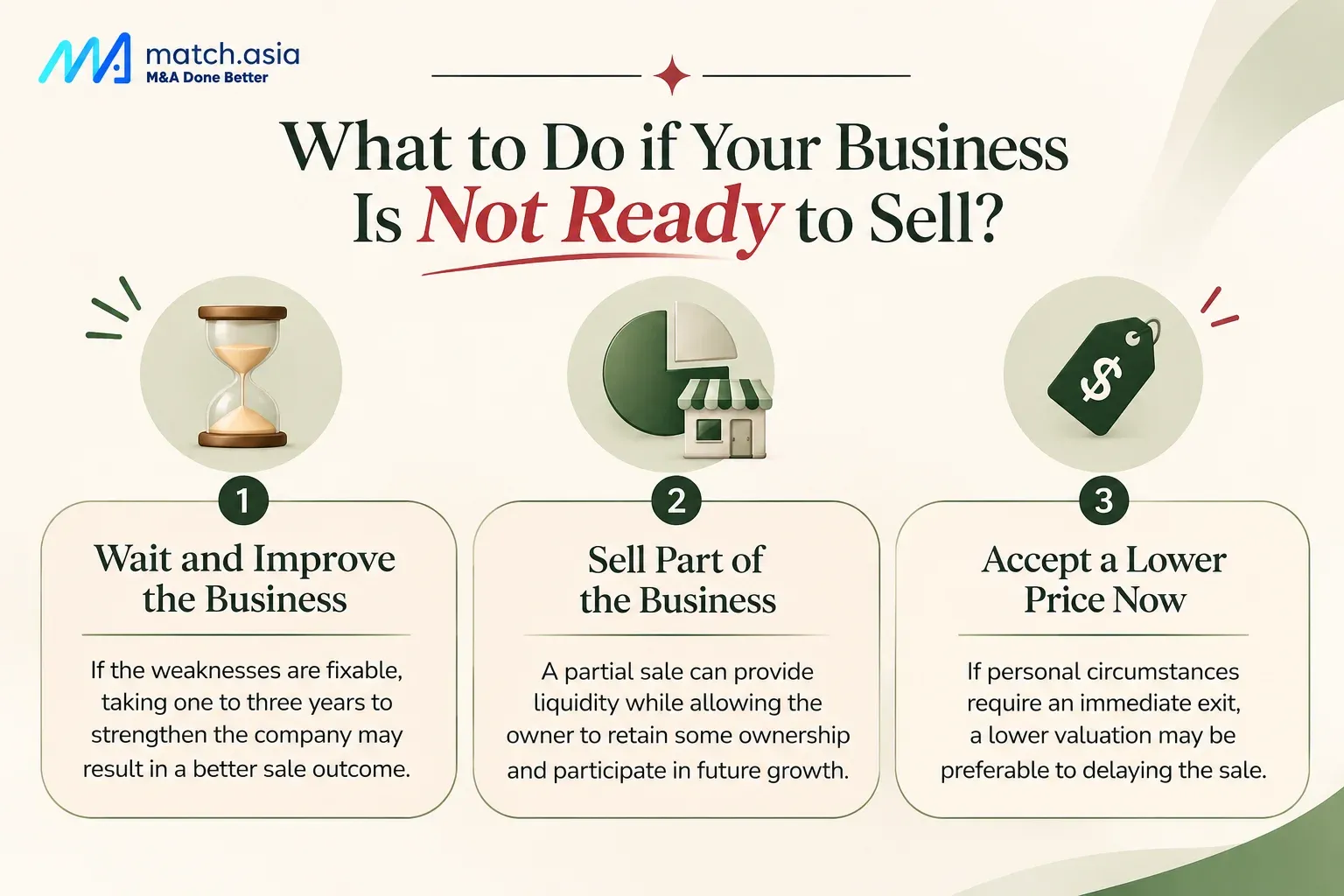
Not being ready today does not mean you cannot sell in the future. In many cases, the better decision is to identify the weaknesses that matter most to buyers and use the next one to three years to address them. Start with the issues that can materially affect value or deal certainty. Improve the quality and consistency of financial reporting, strengthen profit margins where possible, reduce owner dependence, document important processes and diversify customer relationships where concentration is high. Review contracts, licences, intellectual property ownership, tax matters and other legal issues before they become problems during due diligence. You also have several strategic choices:
-
- Wait and improve the business. If the weaknesses are fixable, taking one to three years to strengthen the company may result in a better sale outcome.
-
- Sell part of the business. A partial sale can provide liquidity while allowing the owner to retain some ownership and participate in future growth.
-
- Accept a lower price now. If personal circumstances require an immediate exit, a lower valuation may be preferable to delaying the sale.
The right choice depends on the owner's objectives, financial position, business condition and market environment.
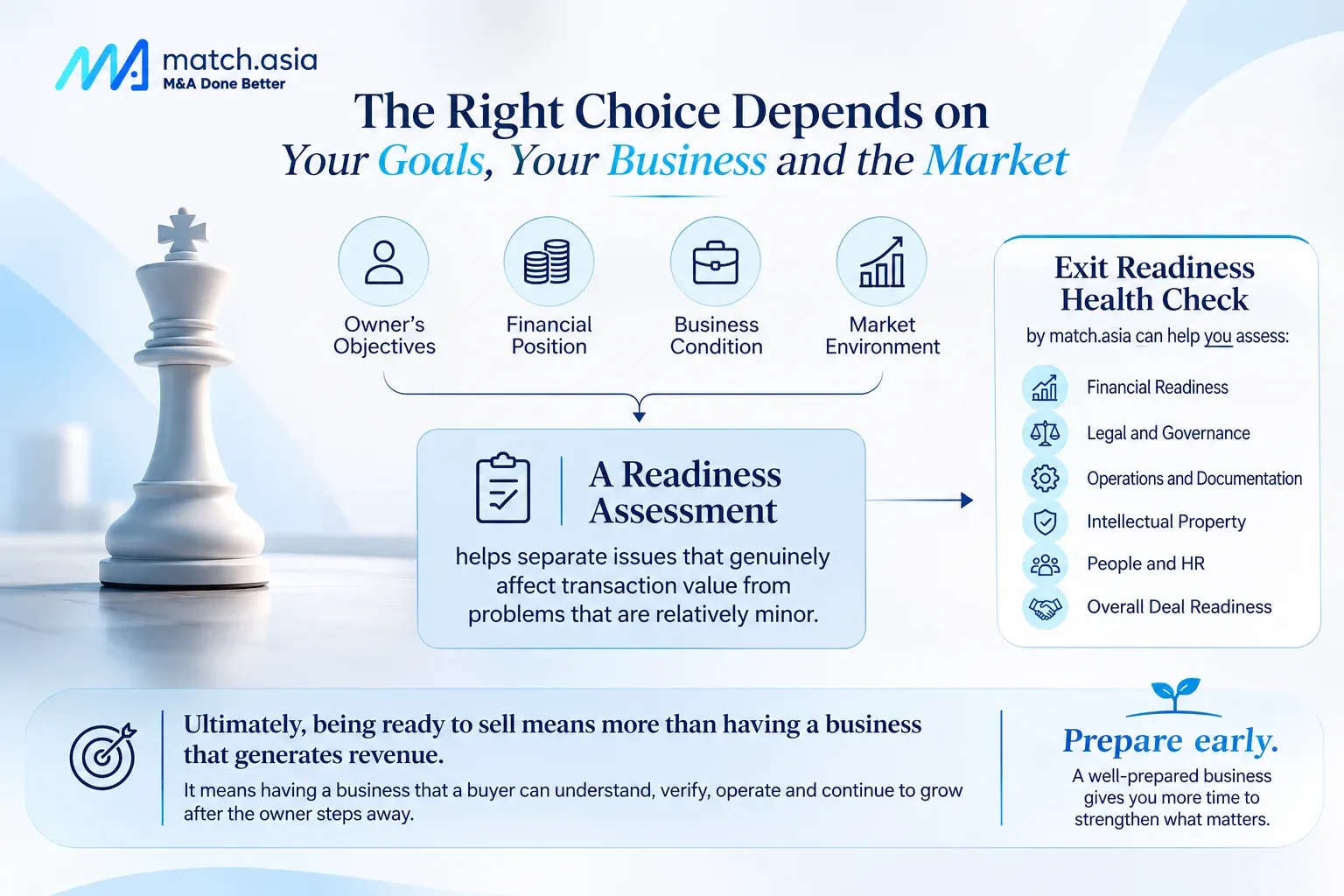
A readiness assessment can help separate issues that genuinely affect transaction value from problems that are relatively minor. For a more structured review, an exit readiness health check by match.asia can help you assess areas such as financial readiness, legal and governance matters, operations and documentation, intellectual property, people and HR, and overall deal readiness. Ultimately, being ready to sell means more than having a business that generates revenue. It means having a business that a buyer can understand, verify, operate and continue to grow after the owner steps away. If important gaps remain, preparing a business for sale well before going to market gives you more time to strengthen the areas that matter most.
Conclusion
Knowing whether your business is ready to sell requires looking beyond revenue and profitability. A strong sale candidate typically has clean financials, stable performance, documented processes, capable management, limited owner dependence and no major unresolved legal or operational issues. At the same time, the owner needs to be personally prepared to step away, and market conditions should support the decision to sell. If your business is not ready today, that does not mean you need to abandon the plan to sell. Identifying the gaps early gives you time to strengthen the business, improve its value and reduce risks before approaching buyers. Ultimately, the goal is to reach the market with a business that buyers can understand, verify, value and confidently take forward.