How to Find Businesses for Sale?
公開日: November 6, 2026
更新日: November 6, 2026

Key Insights
- Define what you want to acquire — Set clear criteria for industry, location, size, budget, financial performance and risk.
- Explore multiple sourcing channels — Use business marketplaces, brokers, M&A advisors, professional networks and direct research.
- Look beyond public listings — Discover off-market opportunities through referrals, industry research and direct outreach.
- Evaluate businesses before contacting sellers — Review asking price, financials, business model, market position and potential warning signs.
- Protect confidentiality — Verify who you are dealing with and use appropriate confidentiality arrangements before sharing sensitive information.
- Build a structured shortlist — Compare potential targets consistently based on strategic fit, financial suitability, risks and available information.
- Prioritise the strongest opportunities — Rank targets, identify unanswered questions and focus your outreach on businesses that best match your acquisition objectives.
- Research across Asia carefully — For cross-border acquisitions, consider local regulations, taxation, ownership requirements and market conditions.
Table of Contents
1.Define What Business You Are Looking For2.Where to Find Businesses for Sale2.1.BusinessforSale Marketplaces2.2.Business Brokers and Professional Networks3.How to Find OffMarket Businesses for Sale?3.1.Identify suitable companies through research3.2.Use your professional network3.3.Approach business owners directly3.4.Build relationships over time3.5.Protect confidentiality4.How to Evaluate a Business Listing Before Contacting the Seller?4.1.Check the Asking Price and Financial Information4.2.Understand What Is Included in the Sale4.3.Review the Business Model and Market Position4.4.Look for Missing Information or Warning Signs5.How to Build a Shortlist of Businesses for Sale?5.1.Step 1 Collect suitable listings5.2.Step 2 Record the key details5.3.Step 3 Rank each opportunity5.4.Step 4 Identify unanswered questions5.5.Step 5 Contact the most promising sellers6.How match.asia Can Help You Find Acquisition Targets?7.Conclusion8.Frequently Asked QuestionsFinding a business to buy requires more than browsing listings and comparing asking prices. The right acquisition should align with your budget, experience, growth objectives and risk tolerance. You also need to understand the business's financial position, customer relationships, operations and reasons for sale before deciding whether to proceed. For first-time buyers, entrepreneurs and established companies looking to expand, knowing how to find businesses for sale is an important first step in the business buying process. Opportunities can be found through online business marketplaces, business brokers, professional networks and direct conversations with business owners. Some businesses are publicly advertised, while others are available only through private discussions. This guide explains where to look for businesses for sale, how to discover off-market opportunities, what to check before contacting a seller and how to build a shortlist of businesses worth investigating.
Define What Business You Are Looking For
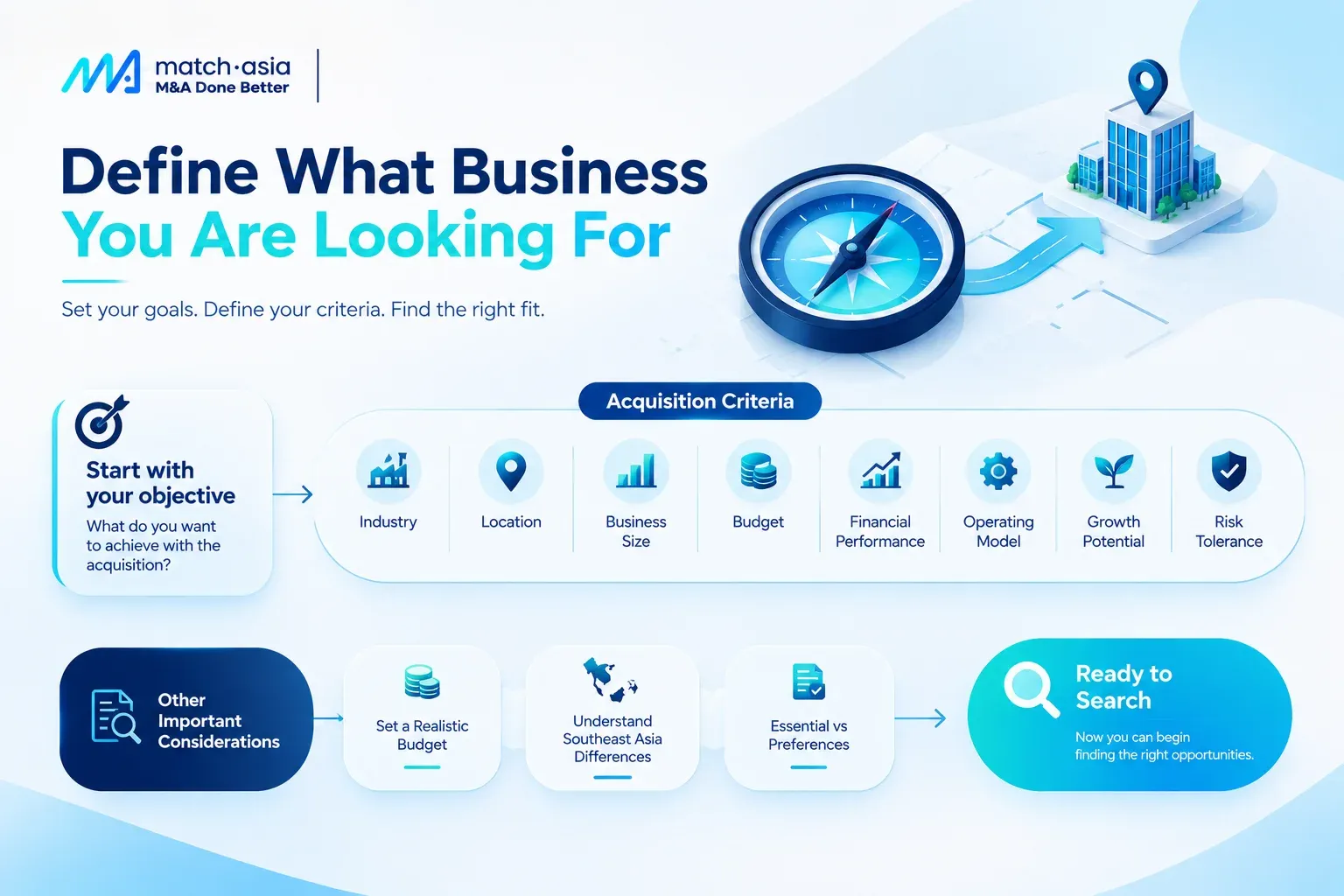
Before searching for business listings, establish what you want to buy and why. Clear criteria help you focus on suitable opportunities instead of spending time reviewing businesses that do not meet your needs. Start by identifying your main objective. You might want to become a business owner, acquire a competitor, expand into a new market, add a complementary product or service, or purchase a company with an established customer base. Your objective will influence the type of business you should consider. Next, define your acquisition criteria:
-
- Industry: Choose sectors that match your experience, interests or strategic goals.
-
- Location: Decide whether you want a business in your city, elsewhere in your country or in another market.
-
- Business size: Set a realistic range based on revenue, earnings, employees or transaction value.
-
- Budget: Consider the asking price as well as working capital, transaction costs and future investment requirements.
-
- Financial performance: Decide what level of profitability, cash flow and revenue stability you need.
-
- Operating model: Consider whether you want a business that requires your daily involvement or has an established management team.
-
- Growth potential: Look for opportunities to expand into new markets, improve operations or develop additional revenue streams.
-
- Risk tolerance: Consider customer concentration, debt, regulatory requirements and dependence on the current owner.
It is also useful to distinguish between essential requirements and preferences. For example, profitability may be essential, while the exact location could be flexible. Set a realistic budget before contacting sellers. A business's asking price is only one part of the financial commitment. You may also need funds for inventory, employee costs, professional advisers, equipment upgrades and day-to-day operations after the acquisition. If you are exploring opportunities across Southeast Asia, consider differences in local regulations, taxation, ownership requirements, business practices and market conditions. These factors can affect both the feasibility and the total cost of an acquisition. Once your criteria are clear, you can begin searching more efficiently.
Where to Find Businesses for Sale
There is no single best source for every buyer. The most suitable channel depends on the type of business you want, your budget, your preferred location and whether you are looking for publicly advertised or privately sourced opportunities. Combining multiple sources usually gives you a broader view of the market.
1. Business-for-Sale Marketplaces
Business-for-sale marketplaces are websites where owners, brokers and other representatives advertise businesses available for purchase. They allow buyers to browse online business listings and compare opportunities across industries, locations and price ranges. These platforms can be useful when you are beginning your search because they bring information about multiple businesses together in one place. Depending on the platform and listing, you may find details such as:
-
- Business location and industry.
-
- Products or services offered.
-
- Asking price.
-
- Reported revenue and profit.
-
- Years in operation.
-
- Number of employees.
-
- Reason for sale, if disclosed.
-
- Contact details for the seller or broker.
Some websites focus on small local businesses, while others cover larger companies, specific industries or cross-border acquisition opportunities. When comparing websites to find businesses for sale, check whether the platform serves your preferred market, provides sufficient listing information and allows you to contact the relevant seller or representative. An online business marketplace can help you discover opportunities, but a listing should be treated as a starting point rather than proof that a business is suitable or that its reported figures are accurate.
a) How to use business listings effectively?
Begin with your acquisition criteria and apply available filters for location, industry, price and business size. Save promising listings and compare them against the same requirements. Read each listing carefully. Pay attention to missing financial details, vague descriptions, unclear ownership information or claims that appear difficult to verify. You should also check when the listing was published or updated, where possible. Older listings may no longer represent businesses that are actively available for sale. Before sharing sensitive personal or financial information, verify who you are communicating with and understand how your information will be used.
2. Business Brokers and Professional Networks
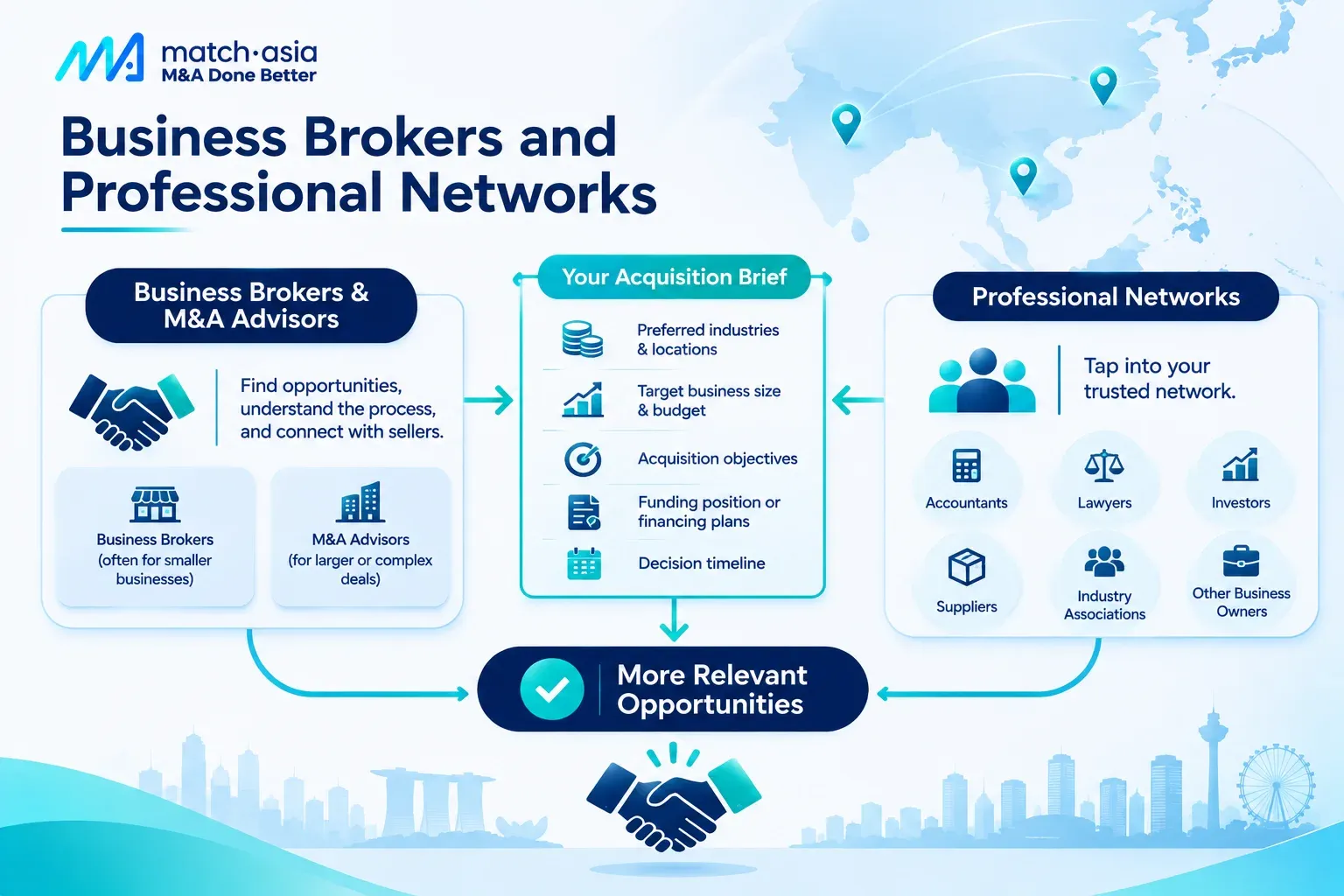
Business brokers and M&A advisors can help buyers discover opportunities, understand the sale process and communicate with potential sellers. Business brokers commonly assist with the sale of smaller businesses. M&A advisors may work on more complex transactions involving larger companies, strategic acquisitions or cross-border deals. Their services vary, so it is important to understand their experience, role and fee arrangements. Business broker listings can provide access to opportunities that are being actively marketed. Advisors may also introduce buyers to businesses that match their acquisition criteria or notify them when suitable opportunities become available. To work effectively with a broker or advisor, prepare a clear acquisition brief that includes:
-
- Your preferred industries and locations.
-
- Your target business size and budget.
-
- Your acquisition objectives.
-
- Your funding position or financing plans.
-
- Your decision-making process and expected timeline.
This information helps the professional identify relevant opportunities instead of sending listings that do not fit your requirements. Professional networks can be equally valuable. Accountants, lawyers, investors, suppliers, industry associations and other business owners may know companies whose owners are considering retirement, succession or a change in ownership. Networking also allows you to build relationships before a business is formally offered for sale. For buyers considering regional acquisitions, an M&A platform for SMEs in Asia can provide another route to exploring businesses and connecting with potential transaction participants.
How to Find Off-Market Businesses for Sale?
Not every business available for acquisition is publicly advertised. Off-market opportunities involve businesses whose owners have not listed them for sale through a public marketplace or formal sale process. These opportunities can be valuable because they may give buyers access to companies they would not discover through ordinary listing searches. However, an off-market business is not necessarily cheaper, easier to acquire or more interested in selling. Finding these businesses requires research, relationship-building and a clear understanding of the type of company you want.
1. Identify suitable companies through research
Start by researching businesses that match your acquisition criteria. Industry directories, trade publications, professional associations and company websites can help you identify potential targets.
Look for businesses with products, capabilities, customer relationships or geographical coverage that align with your objectives.
2. Use your professional network
Tell relevant professional contacts about the type of business you want to acquire. Accountants, lawyers, suppliers and industry specialists may be able to introduce you to owners who are open to discussing their future plans. Be specific about your requirements while respecting confidentiality.
3. Approach business owners directly
Direct outreach allows you to contact companies that fit your strategy even if they have not indicated that they want to sell. Explain who you are, why the business interests you and how a potential acquisition could create value. Avoid assuming that the owner is ready to sell or pressuring them to consider a transaction. Some owners may decline, while others may be willing to explore a conversation now or at a later stage.
4. Build relationships over time
Off-market sourcing is rarely a one-time activity. An owner may not be interested in selling today but could reconsider when their business or personal circumstances change. Maintain appropriate contact, follow up when there is a genuine reason and respect the owner's preferences.
5. Protect confidentiality
Early discussions may involve sensitive information about ownership, financial performance, customers and employees. Verify the identity of the people involved and agree on appropriate confidentiality arrangements before exchanging sensitive information. If an owner expresses interest, establish a clear process for reviewing the business and determining whether further discussions make sense.
How to Evaluate a Business Listing Before Contacting the Seller?
Once you find a promising listing, conduct an initial review before investing time in detailed discussions. The objective is to determine whether the business appears to meet your requirements and whether you have enough information to justify making contact.
1. Check the Asking Price and Financial Information
Compare the asking price with the financial information provided in the listing. Look for reported revenue, profit, cash flow and any available information about debt or major expenses. Revenue alone is not enough to establish whether a business is financially attractive. Consider whether the reported earnings appear consistent with the asking price and whether additional investment might be needed after the acquisition. Where the information is incomplete, record what needs to be clarified rather than assuming the figures are accurate.
2. Understand What Is Included in the Sale
A business sale may include different combinations of assets, inventory, equipment, intellectual property, customer contracts and other operating assets. In some transactions, the buyer may acquire shares in the company instead of purchasing selected business assets. The listing may not explain these details fully. Confirm what the seller expects to include in the transaction and whether any important assets or agreements are excluded.
3. Review the Business Model and Market Position
Understand how the company generates revenue, who its customers are and what makes it competitive. Consider whether the business depends heavily on one customer, supplier, product or key employee. Look at its reputation, competitive environment and opportunities for future growth. Ask yourself whether you have the expertise and resources needed to operate the business successfully.
4. Look for Missing Information or Warning Signs
Be cautious if a listing contains inconsistent financial figures, vague ownership details, unsupported growth claims or insufficient information about the business. These issues do not automatically mean that the opportunity is unsuitable. However, they should be recorded and clarified before you move forward. An initial listing review is not a substitute for due diligence. Before committing to a transaction, buyers should verify financial records, legal ownership, contracts, liabilities and other relevant information with appropriate professional support.
How to Build a Shortlist of Businesses for Sale?
A shortlist helps you focus on the businesses that deserve further investigation. Instead of pursuing every opportunity, use a consistent method to compare listings against your acquisition criteria.
Step 1: Collect suitable listings
Save businesses that meet your basic requirements for industry, location, size and budget. Include opportunities found through marketplaces, brokers, professional contacts and direct research.
Step 2: Record the key details
Create a spreadsheet with fields such as:
| Field | What to Record |
|---|---|
| Business name | Name of the company, where disclosed |
| Industry and location | Sector and operating market |
| Asking price | Advertised price or indicative range |
| Financial performance | Available revenue, profit and cash flow information |
| Strategic fit | How the business supports your acquisition objectives |
| Key concerns | Missing information, potential risks or unclear terms |
| Source | Marketplace, broker, referral or direct outreach |
| Next action | Research further, contact the seller or reject the opportunity |
Step 3: Rank each opportunity
Assess each business based on financial suitability, strategic fit, operational requirements, potential risks and the quality of available information. You can use a simple scoring system, such as rating each category from one to five. Give greater weight to factors that are most important to your acquisition strategy.
Step 4: Identify unanswered questions
For each shortlisted business, list the information you need before making a decision. This may include verified financial figures, customer concentration, reasons for sale, management responsibilities or the assets included in the asking price.
Step 5: Contact the most promising sellers
Prioritise businesses that appear to meet your criteria and have a credible path to further evaluation. Prepare relevant questions before making contact and keep a record of the seller's responses. Review your shortlist regularly. Remove businesses that no longer fit your requirements and add new opportunities as they emerge.
How match.asia Can Help You Find Acquisition Targets?

match.asia can help buyers identify and explore acquisition opportunities that align with their investment criteria. Buyers can define their preferred industries, business size, location, investment objectives and other requirements, then explore relevant businesses and potential acquisition opportunities through the platform. Its technology-driven approach is designed to improve the relevance of buyer-seller connections, while its focus on qualified participants and confidential information sharing can help buyers evaluate opportunities more efficiently. For buyers exploring acquisitions across Southeast Asia, match.asia also provides a way to discover businesses in different markets and connect with sellers as they move from initial interest towards further discussions, due diligence and a potential transaction.
Conclusion
Knowing how to find businesses for sale starts with defining what you want to acquire and understanding where suitable opportunities are likely to appear. Business-for-sale marketplaces and broker networks can help you discover publicly advertised companies, while professional relationships and direct outreach may reveal off-market opportunities. Before contacting sellers, review the asking price, available financial information, business model and potential risks. Then use a structured shortlist to compare opportunities and focus on the businesses that best match your objectives. For buyers exploring regional opportunities, match.asia provides an M&A-focused way to discover businesses and connect with potential sellers. With clear acquisition criteria, careful research and a disciplined evaluation process, you can make better-informed decisions and move forward with greater confidence.