Li Auto Takes Capital-Light Route into Asia-Pacific
Published: November 10, 2026
Li Auto adopts a capital-light strategy to enter Singapore, Hong Kong, Thailand, and Vietnam with the Li Mega MPV through local distributors. Learn how this sidesteps heavy capex while targeting premium MPV demand.
⚡ Quick Take
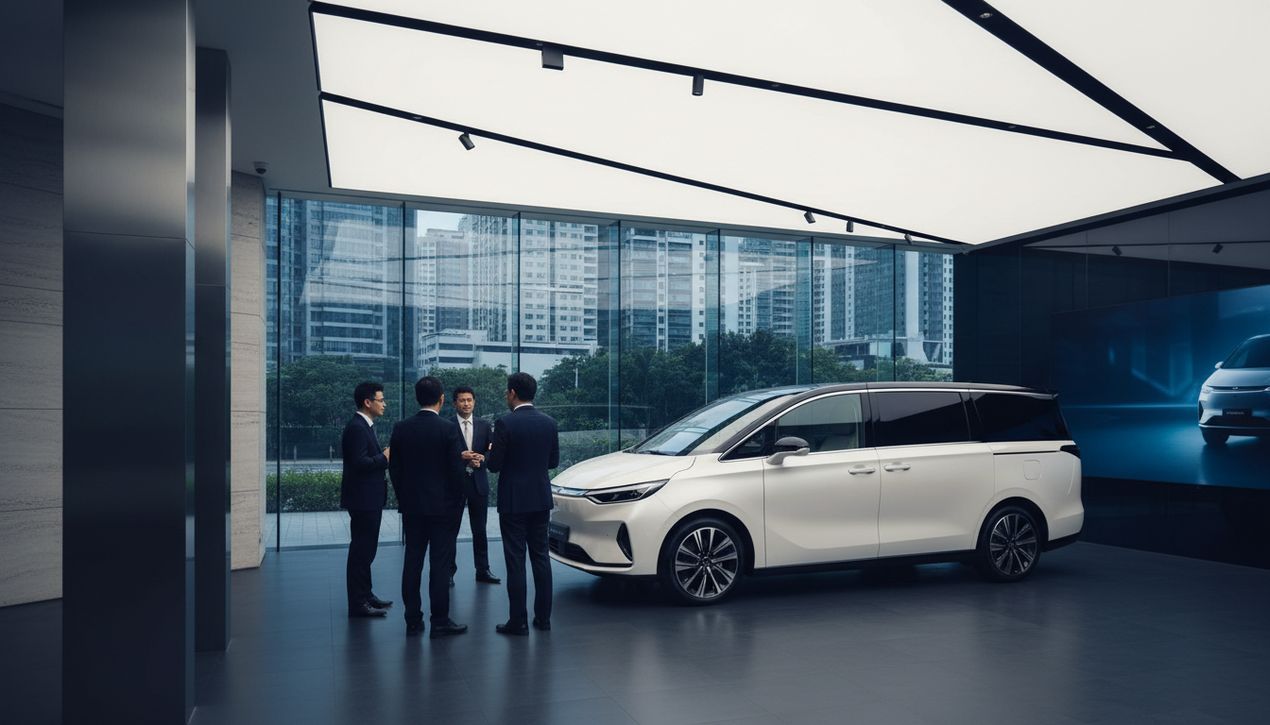
Li Auto is taking a capital-light route into Asia-Pacific, signing distributor deals to bring the Li Mega MPV to Singapore, Hong Kong, Thailand, and Vietnam. The move sidesteps the usual direct-sales playbook.
Summary:
Rather than building its own retail footprint, the Chinese EV maker is handing market entry to established local partners. Wearnes Automotive in Singapore and Zung Fu Group in Hong Kong will handle inventory, showrooms, and homologation, which keeps Li Auto’s balance sheet clear of heavy capex while it tests right-hand-drive demand.
The Deal Structure:
Everything runs through exclusive distribution contracts. The partners carry the working-capital load for stock, real estate, and after-sales facilities. Margin splits, warranty exposure, and channel economics have not been disclosed.
Strategic Rationale:
Domestic price wars have squeezed Li Auto’s margins, so the company is looking to Southeast Asia for higher-margin volume in the premium people-mover segment. Singapore and Hong Kong serve as brand showcases; Thailand and Vietnam are the volume targets that follow.
Market & Competitive Impact:
The Li Mega lands squarely in a segment long dominated by Toyota’s Alphard and Vellfire. It also undercuts the timing advantage BYD’s Denza D9 and the Zeekr 009 were building. Incumbent OEMs now have to defend pricing power in a category that had stayed relatively insulated from broad EV discounting.
The Under-Reported Angle:
Most coverage ignores the 2027 RHD timeline. That is a long runway in today’s EV cycle, and relying on third-party distributors adds friction around OTA compliance, charging standards, and type-approval across four different regulatory regimes.
🧠 Deep Dive
The Catalyst
Li Auto’s Asia-Pacific move is mainly defensive. Domestic penetration has peaked and discounting is eating operating margins, so capacity needs an outlet. The company still has no right-hand-drive models, so anchoring the debut with the Li Mega through distributors is a pragmatic way to plant a flag without tying up cash that is earmarked for domestic R&D.
Synergy vs. Execution Risk
The theoretical upside is pairing Li Auto’s vehicle architecture with partners who already know local rules and high-net-worth buyers. The practical risk is bigger. A 2027 RHD launch gives Zeekr and BYD several years to lock in service networks. Non-equity distribution models also carry classic incentive drift: if the Li Mega underperforms, the same partners carrying the inventory and real-estate risk can simply shift attention back to their European marques.
Regional & Regulatory Landscape
Southeast Asia does not offer a single regulatory path. Singapore’s LTA approvals plus ARF and COE taxes will squeeze distributor margins hard. Thailand’s incentives reward local assembly, which imported units will miss. Vietnam adds separate import clearances and charging-partner requirements. Li Auto has essentially shifted that entire compliance burden downstream.
Channel Economics & Capital Allocation
This is not an equity deal; it is a channel bet. Distributors will need strong margin commitments to justify premium showrooms and high-voltage service bays. Li Auto must price the Li Mega competitively against the Alphard while still leaving enough wholesale margin to keep partners engaged through a three-year pre-launch period.
📊 Deal Stakeholders & Strategic Impact
| Stakeholder / Aspect | Impact | Insight |
|---|---|---|
| Li Auto Corporate | High | Secures a capital-light APAC footprint, preserving balance-sheet liquidity by outsourcing retail capex and homologation risk. |
| Regional Distributors | High | Assumes significant inventory risk and infrastructure capex, but secures a highly differentiated product to defend against legacy brand attrition. |
| Competing Strategics | Medium–High | Toyota, BYD (Denza), and Zeekr face intensified feature-per-dollar competition in the highly profitable premium MPV niche. |
| End Consumers & Fleet Buyers | Moderate | Expands luxury procurement options, likely forcing incumbent brands to increase localized feature sets or adjust pricing. |
| Regulators & Transport Authorities | Variable | LTA (Singapore) and TD (Hong Kong) must navigate type-approvals for a new EV architecture, focusing heavily on battery safety and local charging compliance. |
🌐 Market Context
Chinese OEMs are shifting from direct-sales experiments to partnerships with legacy distributors as they scale in Southeast Asia. The pattern reflects a maturing export playbook that favors capital preservation over rapid owned-network build-outs.
🔭 match.asia Market Perspective
The distributor-led approach underscores that regulatory access, prime real estate, and buyer relationships in Asia-Pacific still sit with established players. The next 12 to 24 months will hinge on whether Li Auto can meet its RHD engineering targets. Any slippage past 2027 leaves its partners holding retail assets with no product to sell and cedes ground to rivals who moved earlier.